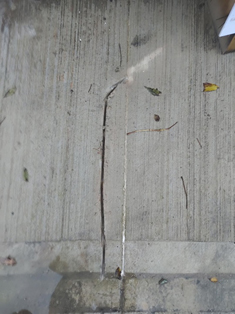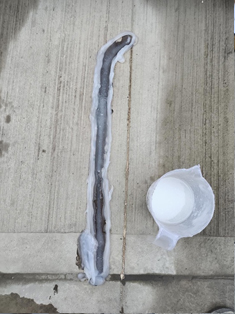
Concrete Crack Repair
Diagnosis First, Repair Second
In concrete structures, a crack is almost always a symptom of an underlying issue — shrinkage, thermal expansion/contraction, differential settlement, overload, corrosion of reinforcement, or poor construction practices. As professionals, we never simply “fill” a crack.
We diagnose the cause, determine if the crack is dormant (stable) or active (still moving), assess its structural significance, and select the repair method that restores both integrity and durability.
Primary Professional Repair Methods for Concrete Cracks
1. Epoxy Injection (Structural Bonding)
This is the gold standard for restoring monolithic strength in dormant, dry cracks. Low-viscosity epoxy resin is injected under controlled pressure through surface-mounted ports or packers spaced along the crack. The epoxy penetrates deep, bonds the two sides together, and can restore or even exceed the original tensile and compressive strength of the concrete.
Not suitable for actively moving cracks, as the rigid bond may fail if movement continues.
Best for: Load-bearing elements (beams, columns, slabs, foundations) where structural integrity must be recovered.
Process: Clean the crack thoroughly, install ports, seal the surface, inject from the lowest point upward until refusal, then remove ports and finish.
2. Polyurethane (PU) Injection (Flexible Sealing & Leak Stopping)
Hydrophobic or hydrophilic polyurethane foams or resins are injected. They react with or repel moisture, expand to fill voids, and create a flexible, watertight seal.
Best for: Actively leaking cracks, wet conditions, or where some ongoing movement is expected (e.g., foundation walls subject to soil pressure or thermal cycling). It does not provide significant structural bonding but excels at waterproofing. Often preferred over epoxy for basement and foundation leaks because flexibility reduces the chance of re-cracking.
3. Routing and Sealing (or Routing & Filling)
The crack is enlarged (usually into a V or rectangular groove) with a crack chaser or grinder to create a reservoir, then filled with a flexible sealant (polyurethane, silicone, or semi-rigid epoxy). Backer rod is often used in wider joints to control depth.
Best for: Non-structural or moving cracks on slabs, driveways, or horizontal surfaces where movement accommodation is needed. Simple, cost-effective, and durable when done correctly.
4. Gravity Feed with Low-Viscosity Resin
For horizontal slabs with fine to medium cracks: A thin polymer resin (epoxy or other) is poured or gravity-fed into the cleaned crack. Effective for bonding without pressure equipment.
5. Other Specialized Techniques
- Crack stitching: Drill holes across the crack and insert stainless steel bars or helical ties grouted in place — good for masonry/concrete interfaces or wider structural cracks.
- Dry packing or polymer-modified mortar patching: For wider surface voids or spalls.
- FRP (Fiber Reinforced Polymer) strengthening: When additional tensile capacity is required beyond simple crack repair.
- Cementitious grouting: For mass filling in certain non-structural applications.
Why Professional Concrete Crack Repair Matters
DIY fillers or caulks frequently fail within 1–3 years because of poor preparation, wrong material, or unfixed underlying movement. A properly executed injection repair (epoxy or polyurethane) can last decades, restoring waterproofing and structural performance.